Rafomatic Tarot
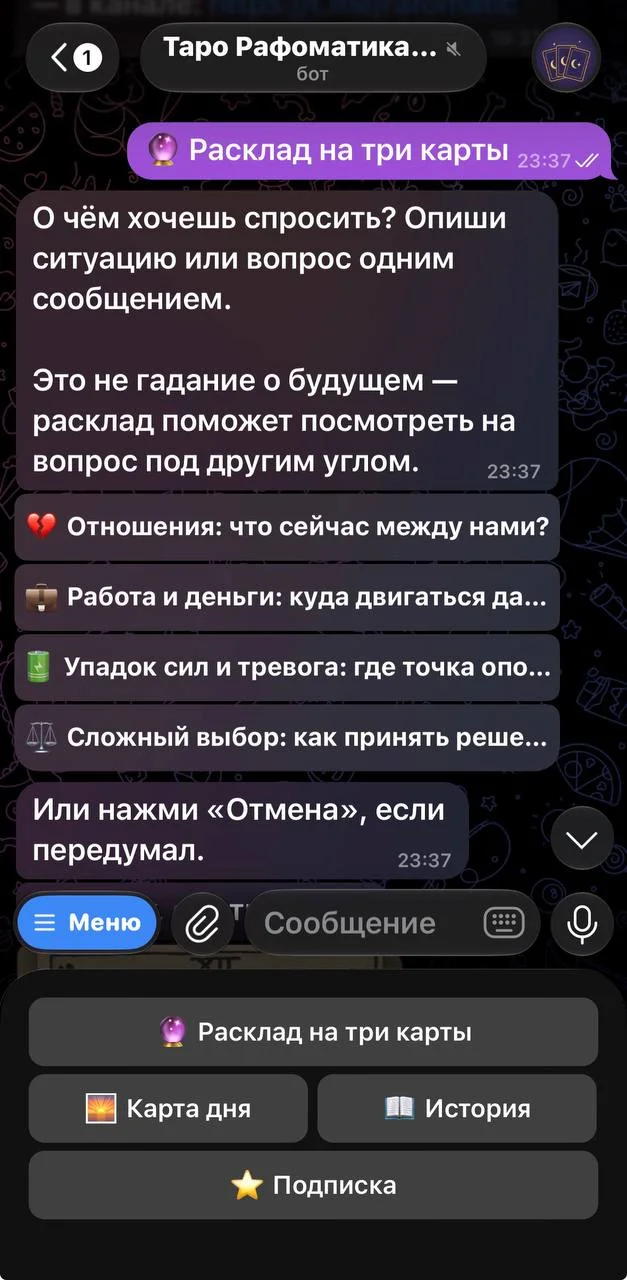
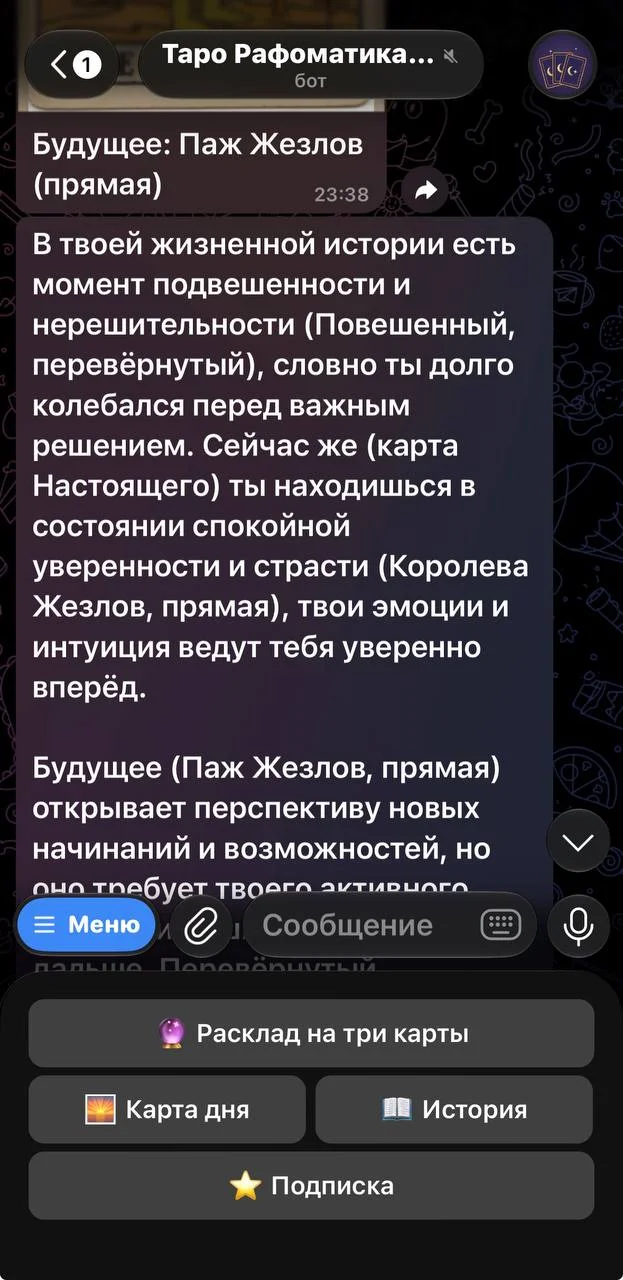
The bot lays out a three-card spread for the user's question, and a language model writes the interpretation.
- Python
- aiogram
- aiohttp
- SQLite
- YooKassa
A bot is a way into your system in the place where customers and staff already talk. We build bots as full applications — with a database, permissions and integrations — not as a set of buttons.
The bot lays out a three-card spread for the user's question, and a language model writes the interpretation.
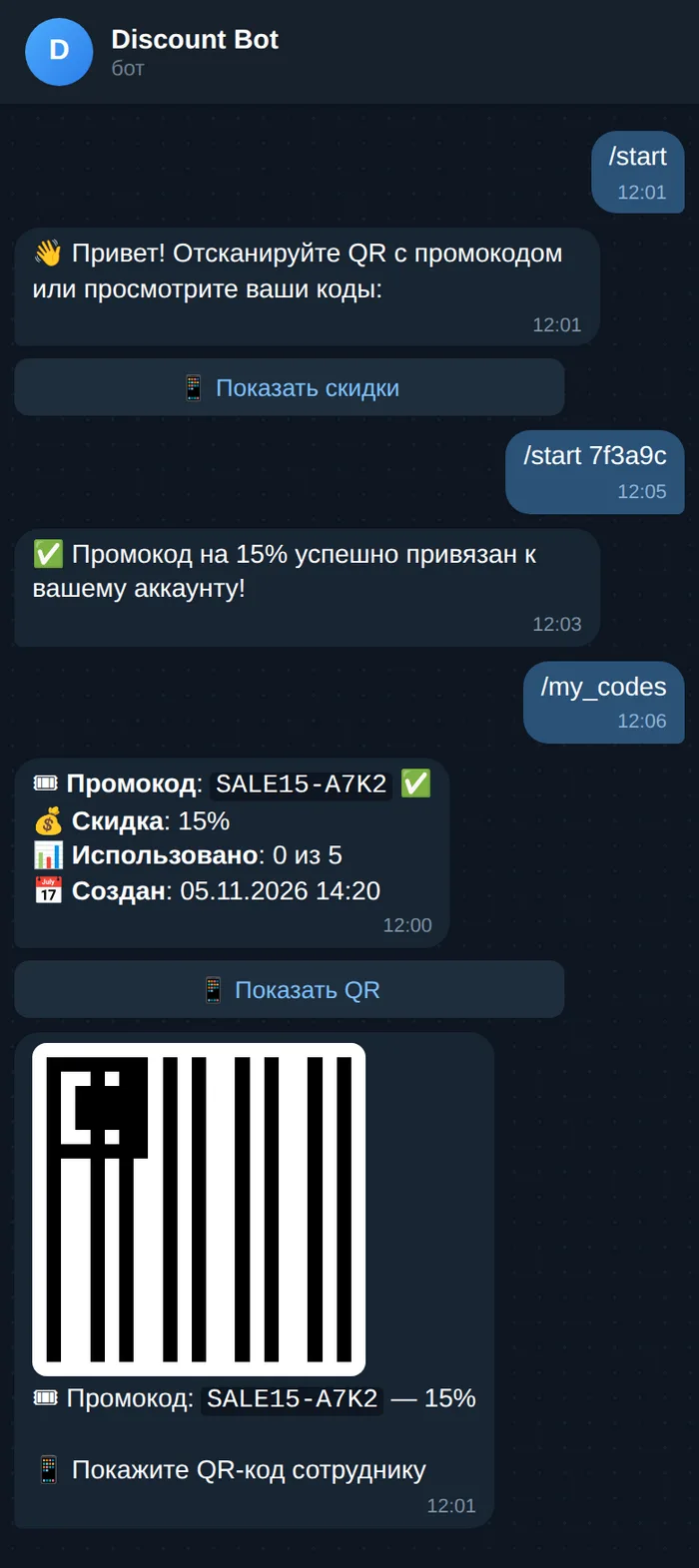
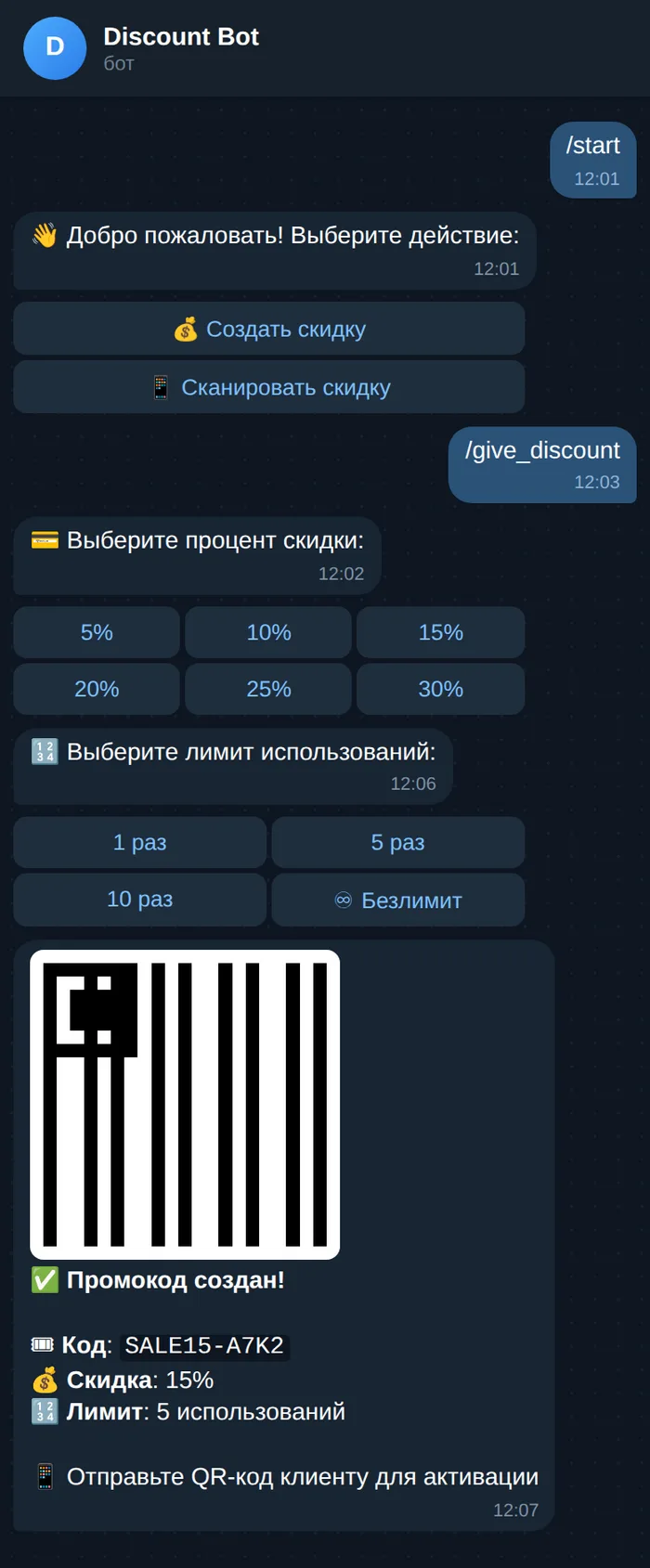
Administrators issue promo codes with a discount and a usage limit, each with a QR code.
Shows the class schedule and fills a separate Google Calendar for today and tomorrow by itself.
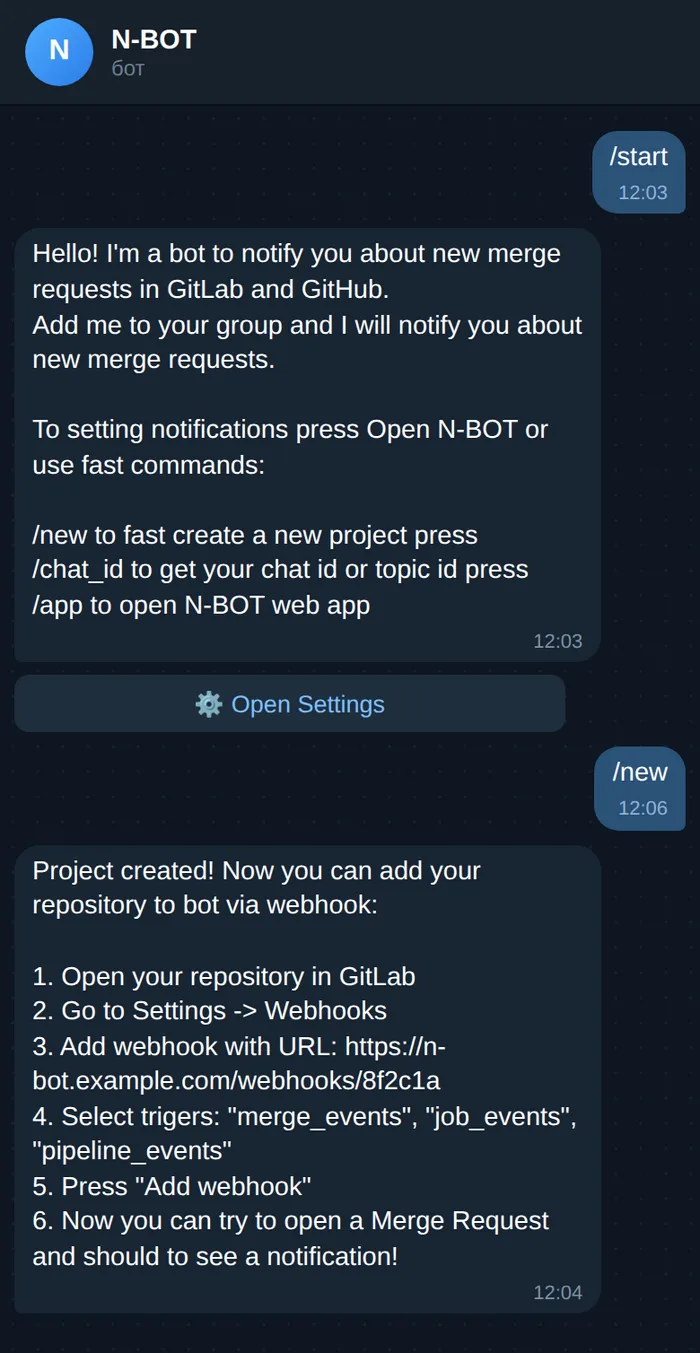
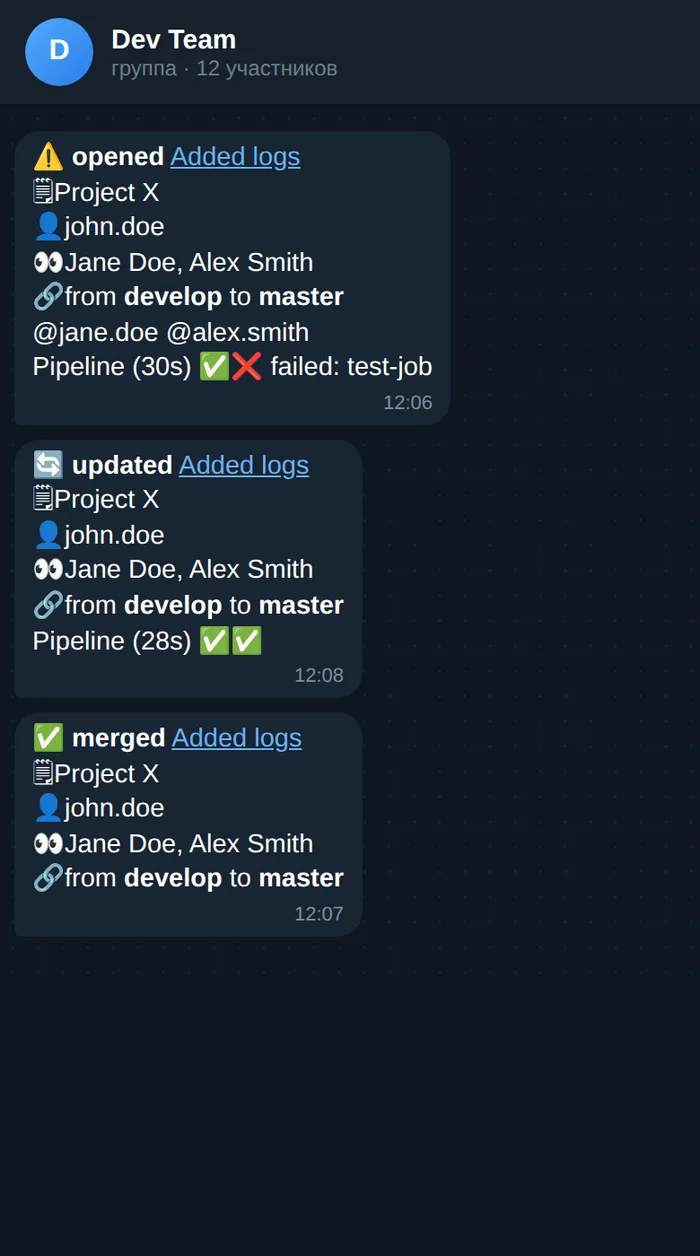
Sends GitLab and GitHub events to Telegram and keeps project settings in a web interface.
A bot fits when the workflow is short and the user does not want to install another app or sign in to a portal.
Behind the conversation is an ordinary backend. We design it like a web service: with data validation, error handling and an event log.
A working bot on Go with a PostgreSQL database, source code in your repository, a description of the flows and deployment instructions. Texts and settings can move to an admin panel if they need to change without a developer.
We need a description of the flows, the systems to integrate with, payment requirements and an approximate number of users. Telegram platform limits and payment-provider terms are checked before we start. We agree on flows and acceptance criteria first, then the stages and price.
When a Telegram bot makes sense for a business, what it can do, how it differs from a Mini App or a website, and what to prepare before ordering development.
Read article: Telegram bot for business: what it can do and how it is built →What determines the cost of telegram bot development: payment flows, business integrations, admin controls, hosting architecture, and long-term maintenance.
Read article: Telegram bot development: what shapes the budget and technical scope →Telegram bot payments architecture: choosing between Stars and fiat gateways, handling pre_checkout_query, idempotency, webhooks and refunds.
Read article: Telegram bot payments: architecture, payment providers and reliable processing →Telegram mini app development guide: when to build a mini app over a text bot, validating initData on the backend, payments, WebApp API and UX constraints.
Read article: Telegram mini app development: architecture, backend validation and UX →Telegram bot webhook vs long polling: comparing getUpdates and setWebhook, HTTPS requirements, scaling, secret_token checks, and update delivery reliability.
Read article: Telegram bot webhook vs long polling: choosing the right transport architecture →How to manage telegram bot conversation state: FSM patterns, Redis vs database storage, handling restarts, callback limits, and duplicate button clicks.
Read article: Managing telegram bot conversation state: architecture, storage, and resilience →A bot for MAX messenger: how the platform and Bot API work, who may publish a bot, how it differs from Telegram, and how to run both channels.
Read article: Bot for MAX messenger: platform, API and how it differs from a Telegram bot →AI agent vs chatbot for business: how they differ, when a scripted bot is enough, and how to give an agent tools, company data and CRM access safely.
Read article: AI agent vs chatbot for business: how to choose and roll it out safely →Telegram bot 1C integration: how to expose stock, orders and statuses through an HTTP service or OData, set roles, avoid duplicate orders and survive downtime.
Read article: Telegram bot 1C integration: access control, idempotency and what to do when 1C is down →Telegram bot CRM integration for lead capture, step by step: fields to collect, duplicates, assigning an owner, manager alerts and retries when the CRM fails.
Read article: Telegram bot CRM integration: how to capture leads and pass them to amoCRM or Bitrix24 →Hire a telegram bot developer or use a no-code builder: architectural limits, state, payments, data ownership, contractor checklist, and when not to build.
Read article: Hire a Telegram Bot Developer or Build It Yourself: No-Code Limits and Decision Guide →Telegram booking bot for appointments: time slots, time zones, cancel and reschedule, reminders, double-booking protection and calendar sync. A practical guide.
Read article: Telegram booking bot: slots, reminders and double-booking protection →How to build a Telegram bot for paid access: subscriptions and renewals, private channel or chat, removing access on expiry, payment failures and a database record.
Read article: Telegram paid subscription bot: renewals, private channel access and removal on expiry →Telegram bot for online store: how to build catalog, cart, stock reserves, payments, 1C/CRM sync, and when a business needs a Mini App or website instead.
Read article: Telegram bot for online store: catalog, cart, payments, and inventory sync →Telegram bot broadcast messages without API bans: Bot API rate limits, Go worker queues, handling 429 retry_after, user blocks, opt-outs, and delivery reports.
Read article: Telegram bot broadcast messages: Bot API limits, worker queues, and delivery →Telegram bot admin panel: chat commands, web dashboard, or Mini App. Operator features, roles via Telegram ID, magic links, audit logs, and delivery.
Read article: Telegram bot admin panel: in-chat commands, web dashboard, or Mini App →Didn't find an answer — ask on the call or in Telegram.
It depends on the workflow. Short actions and notifications are easier in a bot; complex forms, tables and reports belong in a web interface. Often it is one system with two entry points, and they are best designed together.
Yes, if the system has an API or another permitted way to exchange data. Feasibility and scope are confirmed after we inspect the system.
Both are supported by the Bot API. Webhooks fit production systems with high event volume and existing HTTP infrastructure; long polling fits local development and setups without public hosting. We pick the method for your deployment and move processing to background tasks.
Thirty minutes on a call — and you understand the architecture, timeline and engagement format. No obligations.
Or message us on Telegram →Follow our Telegram channel →